




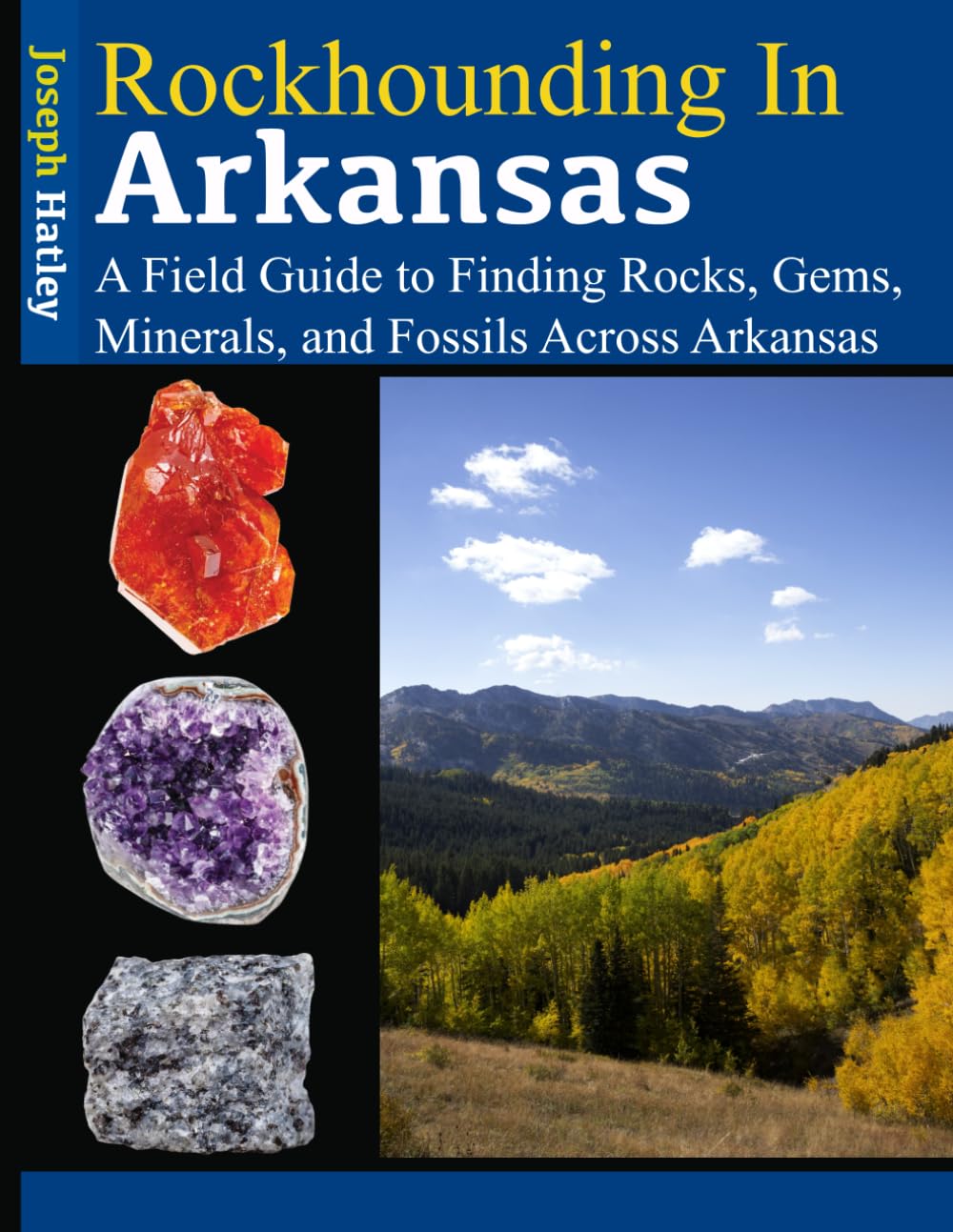
Rockhounding in North Carolina: A Field Guide to Finding Rocks, Gems, Minerals, and Fossils Across North Carolina Paperback – April 2, 2026

 4.4 (90 items)
 Limited Time Sale
$13.19 cheaper than the new price!!
Free cash-on-delivery fees for purchases over $99
Product details
| Management number | 220043369 | Release Date | 2026/05/03 | List Price | $8.80 | Model Number | 220043369 | ||
|---|---|---|---|---|---|---|---|---|---|
| Category | |||||||||
A Field Guide to the Identification and Collection of Rocks Across North CarolinaNorth Carolina preserves one of the most varied geologic landscapes in the eastern United States. The state stretches from the ancient crystalline rocks of the Appalachian Mountains to the rolling Piedmont and the younger sedimentary formations of the Coastal Plain. In the western part of the state, the Blue Ridge Mountains expose some of the oldest rocks in North America, including Precambrian gneiss, schist, and granite formed more than a billion years ago. These rocks were later folded, faulted, and uplifted during the mountain-building events that formed the Appalachian range, leaving behind a rugged terrain rich in mineral deposits and exposed crystalline rock.The Piedmont region, covering much of central North Carolina, contains a complex mixture of metamorphic and igneous formations that host many of the state’s historic mining districts. Gold was first discovered here in the early nineteenth century, beginning the first major gold rush in the United States. The same geologic processes that produced gold also formed deposits of quartz crystals, garnet, kyanite, mica, and other minerals that continue to attract collectors and mineral enthusiasts today. Pegmatite bodies scattered throughout the Piedmont and Blue Ridge regions have produced a wide range of collectible minerals, including emerald, sapphire, and other gemstones long associated with North Carolina’s mining history.Farther east, the Coastal Plain tells a very different geologic story. Layers of sand, clay, and limestone were deposited when shallow seas covered much of the region. These sediments preserve abundant marine fossils, including shark teeth, shells, and other remains from ancient coastal environments. Rivers and streams cutting through these formations often concentrate fossils and mineral specimens in their gravels, creating accessible collecting opportunities along riverbanks and coastal exposures.This guide is written for collectors and field observers seeking a practical understanding of North Carolina’s rocks, minerals, crystals, gemstones, and fossils. The emphasis throughout is on recognition in the field—how specimens occur in bedrock, how they weather from host formations, and where they tend to accumulate in streambeds, hillside exposures, and historic mine areas.Clear explanations of mineral formation, rock cycles, and fossil preservation provide the geologic background needed to understand the materials found across the state. Particular attention is given to Appalachian mountain building, hydrothermal mineralization within the Piedmont mining districts, and the sedimentary environments responsible for the fossil-bearing deposits of the Coastal Plain.A focused section on gemstone and lapidary materials highlights well-known North Carolina finds such as emerald, ruby, sapphire, garnet, and quartz crystals. Practical notes are included on recognizing solid material in both primary deposits and secondary stream gravels.North Carolina’s geology reflects a long history of mountain building, erosion, and changing environments. Its mountains expose ancient crystalline rocks, its streams carry minerals weathered from historic mining districts, and its coastal sediments preserve fossils from vanished seas.A Field Guide to the Identification and Collection of Rocks Across North Carolina is intended as a dependable companion in the field, encouraging careful observation, responsible collecting, and a deeper appreciation for the geologic record preserved across the state. Read more
| ISBN13 | 979-8253747155 |
|---|---|
| Language | English |
| Publisher | Independently published |
| Dimensions | 8.5 x 0.28 x 11 inches |
| Item Weight | 13.1 ounces |
| Print length | 120 pages |
| Publication date | April 2, 2026 |
Mineralogy



Shampoos






Correction of product information
If you notice any omissions or errors in the product information on this page, please use the correction request form below.
Correction Request Form